How to Make Naturally Dyed Easter Eggs
It’s so easy to make natural food dyes in just a few steps. First, you’ll need hard boiled eggs, I like to make Instant Pot Hard Boiled Eggs or Air Fryer Hard Boiled Eggs, but you can always go traditional with Stove-Top Boiled Eggs, or even make Hard Boiled Eggs in the Oven. While the eggs cook, grab a large-rimmed sheet pan to place the bowls of dyes on and clear a space in the fridge for them to sit in the dye. You’ll also need 2 small pots for boiling ingredients for certain colors. Read on to learn how to naturally dye eggs for Easter!
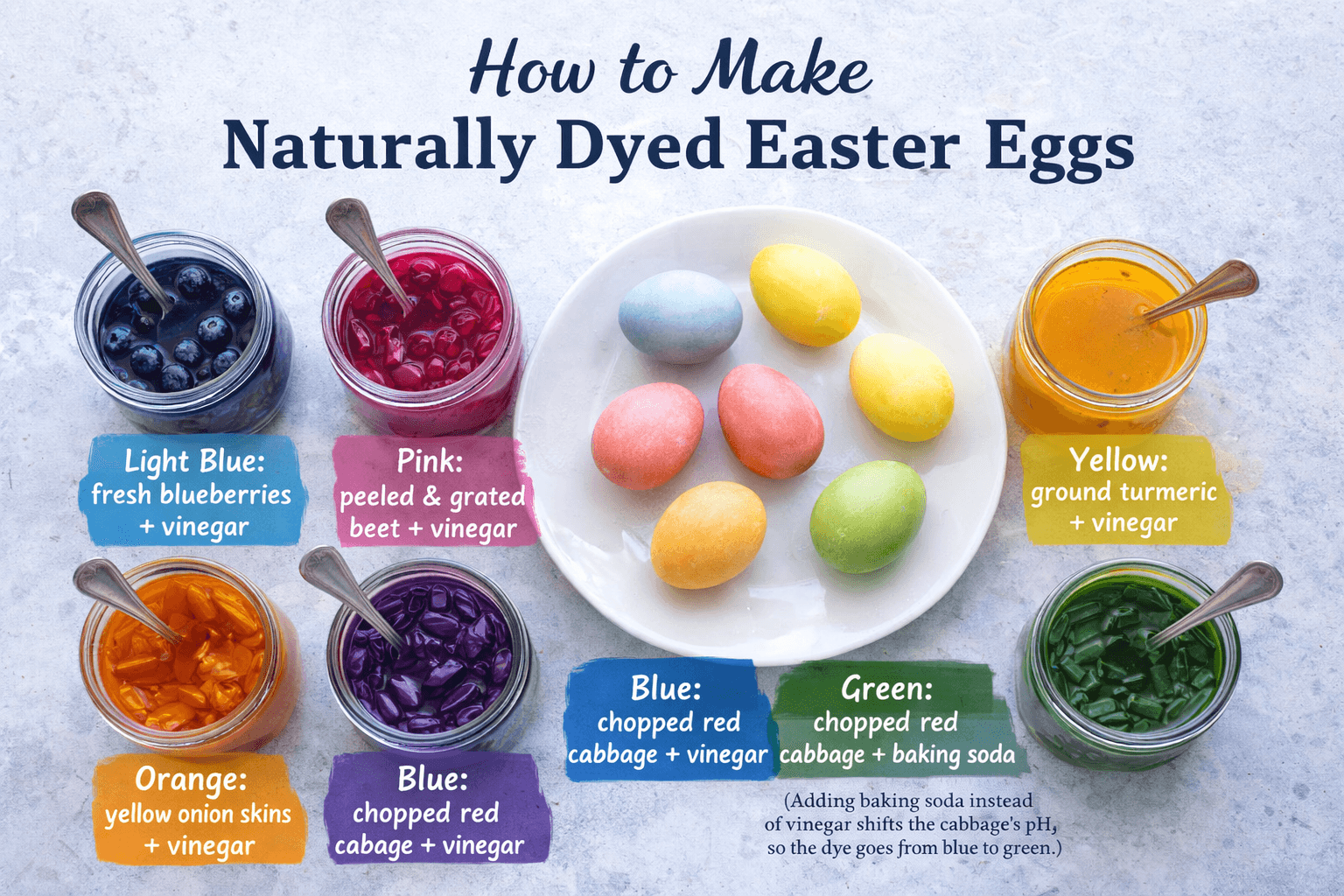
Each color requires hot water with white vinegar or baking soda added to help the colors stick to the shells. Below represents the additional natural ingredients to make dye for easter eggs and whether to add vinegar or baking soda.
- Light blue: fresh blueberries + vinegar
- Pink: peeled and grated beet + vinegar
- Yellow: ground turmeric + vinegar
- Orange: yellow onion skins + vinegar
- Blue: chopped red cabbage + vinegar
- Green: chopped red cabbage + baking soda (Adding baking soda instead of vinegar shifts the cabbages ph so the dye goes from blue to green.)
For Pink Eggs
Step 1: Combine beets, vinegar, and hot water in a bowl. Add 2-3 eggs to the bowl, making sure they are fully submerged.
Step 2: Allow the eggs to soak for at least 4 hours or overnight in the fridge, and then remove them from the dye and let dry on a paper towel-lined sheet pan.
For Orange Eggs
Step 1: Place yellow onion skins, vinegar, and hot water in a bowl and mix the ingredients to combine. Submerge the eggs in the dye liquid.
Step 2: Allow the eggs to soak in the fridge, and then remove them from the dye and let dry on a paper towel-lined sheet pan.
For Yellow Eggs
Step 2: Allow the eggs to soak in the fridge, and then remove them from the dye and let dry on a paper towel-lined sheet pan.
For Green Eggs